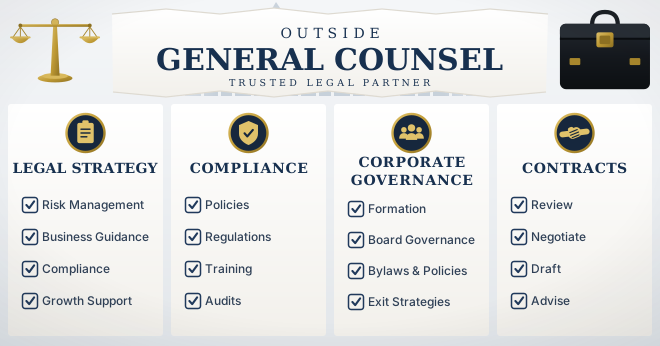
What outside general counsel means, and whether your business needs it, is often misunderstood. Most small and mid-sized businesses do not need a full-time in-house attorney, but they do need consistent legal guidance, someone who knows the business and can give useful advice without the overhead of bringing a lawyer up to speed from scratch every time a question comes up. Outside general counsel is how that works.
What it is
Outside general counsel is an arrangement where a business retains an attorney on an ongoing basis to serve as its primary legal resource. The attorney gets to know the business, its contracts, its relationships, its risk profile. When a legal question comes up, there is someone to call who already has the context to give a useful answer. The relationship is typically structured on a retainer or flat-fee basis rather than hourly billing for each discrete matter.
What it is not
Outside general counsel is not a litigator you call when you are being sued. It is not a specialist brought in for one transaction. It is a generalist relationship, someone who handles contracts, employment questions, business structure decisions, regulatory questions, and vendor agreements, and who knows when a matter needs a specialist and can help get you to the right one. The value is not in any single interaction. It is in context that builds over time, so advice does not have to start from zero every time.
Who benefits from it
The arrangement makes the most sense for businesses generating real revenue, with employees, that are regularly entering into contracts and business relationships. If legal questions come up several times a year and you are either ignoring them or spending time and money getting a lawyer caught up each time, an ongoing relationship is probably more efficient. It also suits business owners who want to pick up the phone with a quick question without it turning into a billing event.
Where it fits
For businesses focused on transactions, contracts, and ongoing operations rather than litigation, outside general counsel is a natural fit. Contract review, vendor agreements, employment matters, lease negotiations, and business structure questions are all areas where ongoing guidance adds more value than episodic advice, because the attorney already knows your business when the question comes in.
What to look for
Responsiveness and genuine interest in your business matter more than anything else. Legal credentials are the baseline. The ability to give practical advice quickly and in plain language, without turning every question into a research project, is what most small business owners actually need. The relationship works when the attorney understands what you are trying to accomplish and helps you get there. It does not work when every conversation ends with a thorough list of risks and no recommendation.
If you find yourself handling legal questions on your own because calling a lawyer feels like too much of a production, an outside general counsel relationship may be worth a conversation. One discussion about how you run your business and what tends to come up is usually enough to figure out whether it makes sense.