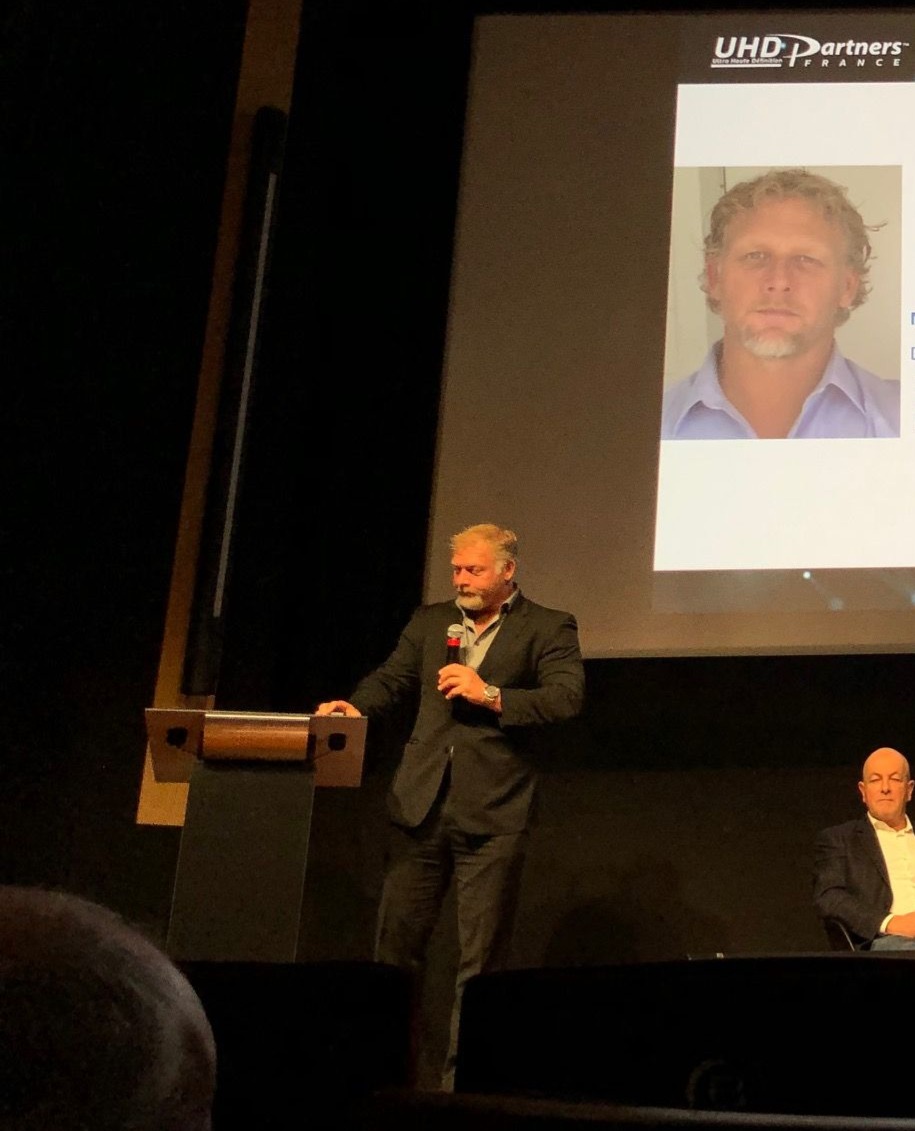
A few years ago I was brought in to help manage the global shutdown of Ultraviolet, a major digital media platform that had built one of the largest consumer content libraries in existence. Thirty million members across multiple countries. Over three hundred million titles: movies and television that people had legitimately purchased and stored in their digital lockers, content they owned and expected to access indefinitely.
Ultraviolet was shutting down. I was brought in to work with the legal team and the executive leadership to figure out how to communicate that to thirty million people in a way that was honest, genuinely helpful to the members affected, and didn't expose the company to the litigation a situation like this could easily generate. That required understanding the legal exposure, the business objectives, and the communications strategy all at once, and making sure they pointed in the same direction.
In the room at any given moment: engineers, business executives, attorneys, communications professionals, regulatory considerations, and a timeline that didn't leave room for getting it wrong. And the conversation wasn't happening in one city or one time zone. This was a global operation, coordinated across languages, cultures, and legal frameworks that varied by jurisdiction. What was legally required in one market was different from another. What consumers expected, and what the right thing to do was, didn't always map neatly onto either.
Three Questions, One Answer
The central issue wasn't really about the shutdown itself. It was about the members. These were people who had paid real money for content they believed they owned. The legal picture was more complicated. Every title in every digital locker was governed by licensing terms between the platform and the content creators, and what those terms actually said about the durability of consumer access was itself a legal question. How you characterized those rights in a public communication, to thirty million people across multiple jurisdictions, in a way that was accurate without becoming a litigation roadmap, required the legal team and the communications work to stay tightly coordinated.
Three questions kept coming back. What was technically feasible, given the platform infrastructure and the transition timeline? What was legally required, given consumer protection obligations across multiple jurisdictions? And what was the right thing to do, setting aside both of those answers, as a matter of how a company ought to treat the people who trusted it?
Those three questions don't always produce the same answer. Part of the work was making sure the organization asked the third question seriously.
The technically feasible window and the legally required minimum are often shorter than what a genuine commitment to consumers would look like. Making sure members had legitimate pathways to access and transfer their content, adequate time to do it, and clear communication about what was happening and why. That was the standard we built toward. And it had to be communicated consistently across every market, translated not just linguistically but culturally, in a way that reflected what the company was actually doing rather than what it wanted people to believe it was doing.
That distinction matters more than most organizations realize. A message that's carefully worded but disconnected from the underlying reality doesn't hold up. People can tell. The communication that works is the one that accurately reflects the organization's actual values and actual actions. Our job was to make sure those were aligned first, and then to communicate them clearly.
The shutdown was managed without the litigation disaster it could easily have become. That outcome wasn't accidental.
What This Has to Do With Outside General Counsel
Most small and mid-sized Colorado businesses don't face a global platform shutdown with thirty million affected consumers. But the same dynamic plays out at every scale. A dispute with a key vendor. A regulatory inquiry. A partnership dissolving under pressure. A major contract negotiation with a customer who matters. A crisis that lands in the press before the company has figured out what it wants to say.
These situations have legal dimensions, business dimensions, and human dimensions. How you handle all three at once determines the outcome. A lawyer who only sees the legal exposure will protect the company from liability and sometimes create a different problem in the process. A communications person who doesn't understand the legal constraints will say something that the legal team then has to manage. An executive making business decisions without either is operating without the information they need.
Outside general counsel done well means having someone who can see the whole picture. Not just the contract language, but the relationship it sits in. Not just the compliance question, but the business decision that created it. Not just the legally correct answer, but whether that answer serves the company's actual interests and how it will land with the people on the other end of it.
What It Means in Practice
For a Colorado business, outside general counsel means you have someone available who understands your business, not just your legal questions. Someone who can review a contract and also tell you whether the deal structure makes sense. Someone who can spot a regulatory issue before it becomes a problem and help you think through the business response, not just the legal one. Someone who's been in rooms where the hard decisions were made under pressure and knows what that process looks like when it works.
That fluency across disciplines isn't something law school teaches. It comes from working in environments where the problems don't respect departmental boundaries, where the stakes are high enough that getting it wrong has real consequences, and where the only way through is to understand the full situation rather than just one piece of it.
If that's the kind of counsel you're looking for, here's more on how Hoog Law approaches it, or just reach out directly and we'll talk through what that relationship looks like for your business.
About the Author
Michael Hoog is a Colorado business attorney and founder of Hoog Law in Longmont, Colorado. He works with businesses across the range of their life cycle, from entity formation to exit strategy and most things in between. This article is for general information purposes only and does not constitute legal advice or create an attorney-client relationship.